Did you know…
- Hampshire sheep get their name from the county of Hampshire in Southern England where they originated in the early 1800s.
- Hampshire sheep were first imported to the United States in 1840 but no records indicate they survived the Civil War. The first authentic import record was in 1879.
- The American Hampshire Sheep Association was started in 1889.
- Hampshire sheep are primarily used for their meat and are able to efficiently convert forage. Their fiber is also used.
- Hampshire rams are used to sire quality, fast growing market lambs on ranches and farms around the world.
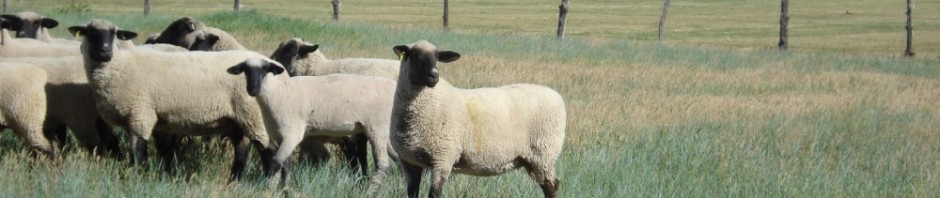
- Hampshires are muscular sheep with mild dispositions. Hampshire sheep can be differentiated from other breeds by an unbroken wool cap that should extend from their neck over their forehead. Hampshires also should have some wool beneath the knee.
- Mature rams should weigh 300 pounds or more.
- Mature ewes should weigh 200 pounds or more in breeding condition.
- Hampshire ewes typically produce at least 2 strong and active lambs each year. However, it is not uncommon to see triplets and Hampshire breeders sometimes even see quadruplets on rare occasions.
- Today American Hampshire sheep look very different from their English cousins. They are much taller and not as woolly!
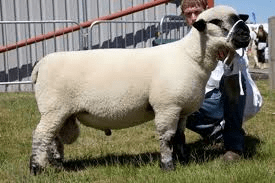
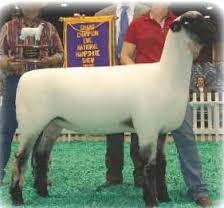 English Hampshire ram (top) and American Hampshire ram (bottom)
 - Visit the American Hampshire Sheep Association website by clicking here.
-

Twin Hampshire lambs
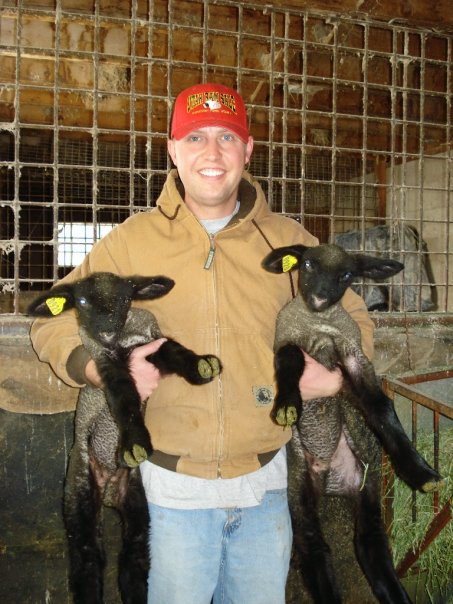
 Robbins Brothers Hampshires